三妹光陶艺 Sam Mui Kuang Pottery
蔡楚金老师谈龙窑渊源、釉药研究与陶艺基本功 · Mr. Chua Soo Kim on Dragon Kilns, Glaze Chemistry and Learning the Craft
By Ben Kee — Founder of KWHD Singapore
“如果不了解泥料特性和烧成曲线,窑炉会出问题,作品也可能报废。做陶,成型只是一半;另一半是懂火、懂化学,也要沉得下心。”
— 蔡楚金老师
“If you don’t understand clay behaviour and firing profiles, kilns break down and work gets ruined. Making is only half of it. You have to know the fire, the chemistry, and the quiet.”
— Mr. Chua Soo Kim
The Journey
三妹光陶艺自1994年起设于 Jalan Kelulut,但蔡家与陶艺的渊源要早得多。
早年,蔡家曾在裕廊龙窑烧制大缸等日用陶器。1970年代,他们迁至宏茂桥 Jalan Puteh,之后再搬到现在的工坊。
如今,三妹光由蔡楚金老师与兄弟姐妹共同经营。兄弟姐妹主要负责日常运营,蔡老师则专注于陶艺制作、窑炉技术、釉药研发与教学。
多年来,他也培训了不少新加坡美术教育工作者,内容包括窑炉维护、烧成技术和釉药调配等陶艺实务。
Sam Mui Kuang Pottery has been operating at Jalan Kelulut since 1994, but the Chua family’s involvement in pottery goes back much further.
The family previously produced large jars and other utilitarian ware at the Jurong Dragon Kilns before moving to Jalan Puteh in Ang Mo Kio in the 1970s, and later to their current location.
Today, the studio is run by Mr. Chua Soo Kim and his siblings. While his siblings handle much of the day-to-day operation, Mr. Chua focuses on pottery, kiln technology, glaze development and teaching.
Over the years, he has also trained generations of art educators in Singapore, including in the technical aspects of ceramics such as kiln maintenance, firing and glaze preparation.
The Work
经营一个陶艺工坊,远不只是把作品做出来。
在三妹光,蔡老师负责的范围包括窑炉设置、烧成、釉药配方以及各种技术问题处理。其中,釉药化学一直是他的重要研究领域,尤其是结晶釉。
教学也是他多年来工作的重要部分。通过包括新加坡教师艺术学院(STAR)在内的平台,他曾为在职美术教师讲授学校陶艺课程所需的实务知识。
这些内容包括如何操作与保养窑炉、如何安全使用釉药,以及烧成出现问题时如何判断原因。
目标很实际:让老师有足够的技术基础,能够自己使用设备,并把学校的陶艺课程持续开展下去。
Running a ceramics studio involves much more than making pots.
At Sam Mui Kuang, Mr. Chua works across kiln setup, firing, glaze formulation and technical troubleshooting. His knowledge of glaze chemistry is a major part of the studio’s practice, particularly his work with crystalline glazes.
Teaching has also been a significant part of his career. Through institutions including the Singapore Teachers’ Academy for the aRts (STAR), he has worked with in-service teachers on the practical knowledge needed to run ceramics programmes in schools.
That includes understanding how to operate and maintain kilns, use glazes safely and diagnose problems when a firing does not go as planned.
The aim is straightforward: teachers should be able to use the equipment confidently and keep their ceramics programmes running without depending on outside technical support for every issue.
The Philosophy
蔡老师很强调对整个陶艺流程的理解,而不是只学会某一项技法。
他对结晶釉的研究始于1980年代初。当时,他认识了来自昆士兰科技大学的乔·查斯特顿教授(Professor Joe Chasterton),并由此更深入地接触结晶釉背后的化学与矿物原理。
之后,蔡老师通过不断测试发展自己的配方。几十年来,他进行了数千次试烧,记录烧成结果,并逐步累积出一百多种釉药配方。
他教授拉坯时,也采用同样系统化的方式。
学员先从定中心、拉直筒和控制壁厚开始,把基本动作练到稳定,再逐步进入釉药调配和施釉等环节。
对蔡老师来说,反复练习,才能把技术真正练成习惯。
Mr. Chua places strong emphasis on understanding the entire ceramics process rather than learning individual techniques in isolation.
His interest in crystalline glazes developed in the early 1980s after meeting Professor Joe Chasterton from the Queensland University of Technology, who introduced him to the chemistry and mineralogy behind crystalline glaze formation.
Mr. Chua continued developing his own formulations through repeated testing. Over the following decades, he carried out thousands of test firings, recorded the results and gradually built a library of more than a hundred glaze recipes.
He takes a similarly systematic approach to wheel throwing.
Students begin with centring, cylinders and wall control, repeating the basics until they become consistent. Only then do they move on to more advanced processes such as glaze preparation and application.
For Mr. Chua, repetition is what turns technique into instinct.
访谈录:对话蔡楚金老师 · Q&A with Mr. Chua Soo Kim
1.您曾在国立教育学院(NIE)指导不少美术教师。当时的陶艺训练是怎样的?
You trained generations of art teachers at the National Institute of Education (NIE). What did ceramics training look like then?
我们那时大概八到十个人一班,这样每个人都能得到足够的技术指导。专修陶艺的学生要求比较高,从一团生泥到最终成品,整个过程都要掌握。到了毕业展,作品陈列也要自己完成,再面对校外考官。
We kept the classes small, around eight to ten students, so everyone could receive enough technical supervision. For students specialising in ceramics, the expectations were high. You had to understand the whole process from raw clay to finished work. Students also had to set up their own exhibition displays before meeting the external examiners.
2.您的结晶釉在圈内很有名。这套配方体系是怎样建立起来的?
Your crystalline glazes are well known. How did you develop your formulations?
1980年代初,我原本计划到澳洲深造,后来认识了昆士兰科技大学的查斯特顿教授。他专研矿物与釉药,也教了我很多结晶釉化学方面的知识。
之后我就一直试。四十多年来,做了数千次试烧,也把结果一一记录下来,慢慢才形成现在这一百多种釉药配方。
In the early 1980s, I was planning to study in Australia when I met Professor Joe Chasterton from the Queensland University of Technology. He was an expert in glaze mineralogy and taught me a lot about crystalline glaze chemistry.
From there, I kept testing. Over the next forty years, I carried out thousands of test firings and recorded the results. That gradually became the library of more than a hundred glaze formulations we use today.
3.我自己的工作也比较偏向教育资源和课程包的开发,希望最终能让老师独立施教,而不是每一堂课都由我亲自去教。您怎么看这种做法?
Much of my own work involves developing education resources and curriculum packages that teachers can eventually deliver independently, rather than having me teach every session. How do you see that approach?
这样会比较长久。如果每天所有时间都花在重复授课,就很难再有精力去研发新的东西,或者提升自己的专业。
如果你能把一套好的框架建立起来,再教会其他人怎么使用,影响就可以扩大,也不需要每一次都靠你亲自去做。
It is more sustainable. If you spend all your time teaching the same lessons every day, you do not have much energy left to develop new work or improve what you are doing.
If you can build a good framework and teach other people to use it properly, the work can reach more people without depending on you every time.
4.我也打算参加您的常规课程,把自己的拉坯基本功练扎实。课程是怎样循序渐进的?
I’m planning to join your regular sessions to strengthen my own wheel-throwing fundamentals. How is the progression structured?
没有捷径。先把定中心练好,再练直筒、控制壁厚,一直做到动作成为肌肉记忆。
素烧之后,再学习釉药调配和施釉。完成十二期系统课程后,学员就可以申请成为工坊会员。
There are no shortcuts. You start with centring, then cylinders, then controlling wall thickness. You practise until the movements become muscle memory.
After bisque firing, students move on to glaze preparation and application. Those who complete the full twelve-term curriculum can qualify for studio membership.
5.所以最重要的,还是反复练习,把基本功练扎实?
So the emphasis is really on repetition and strong fundamentals?
你就是要在拉坯机前把时间花下去。基本功真正长到手上以后,谁也拿不走。
You have to put the hours in at the wheel. Once the fundamentals are in your hands, no one can take them away from you.
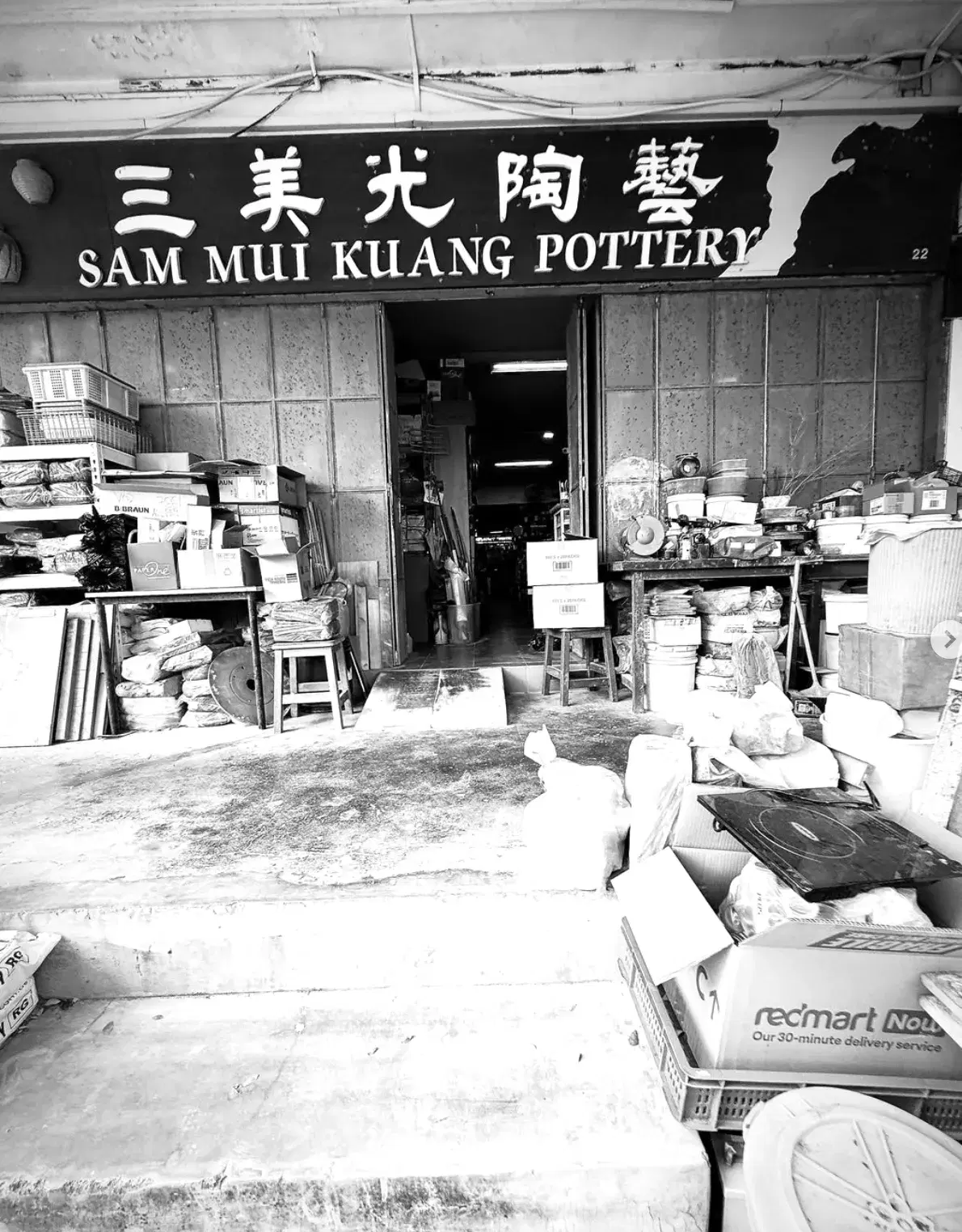
Sam Mui Kuang Pottery, 22 Jalan Kelulut
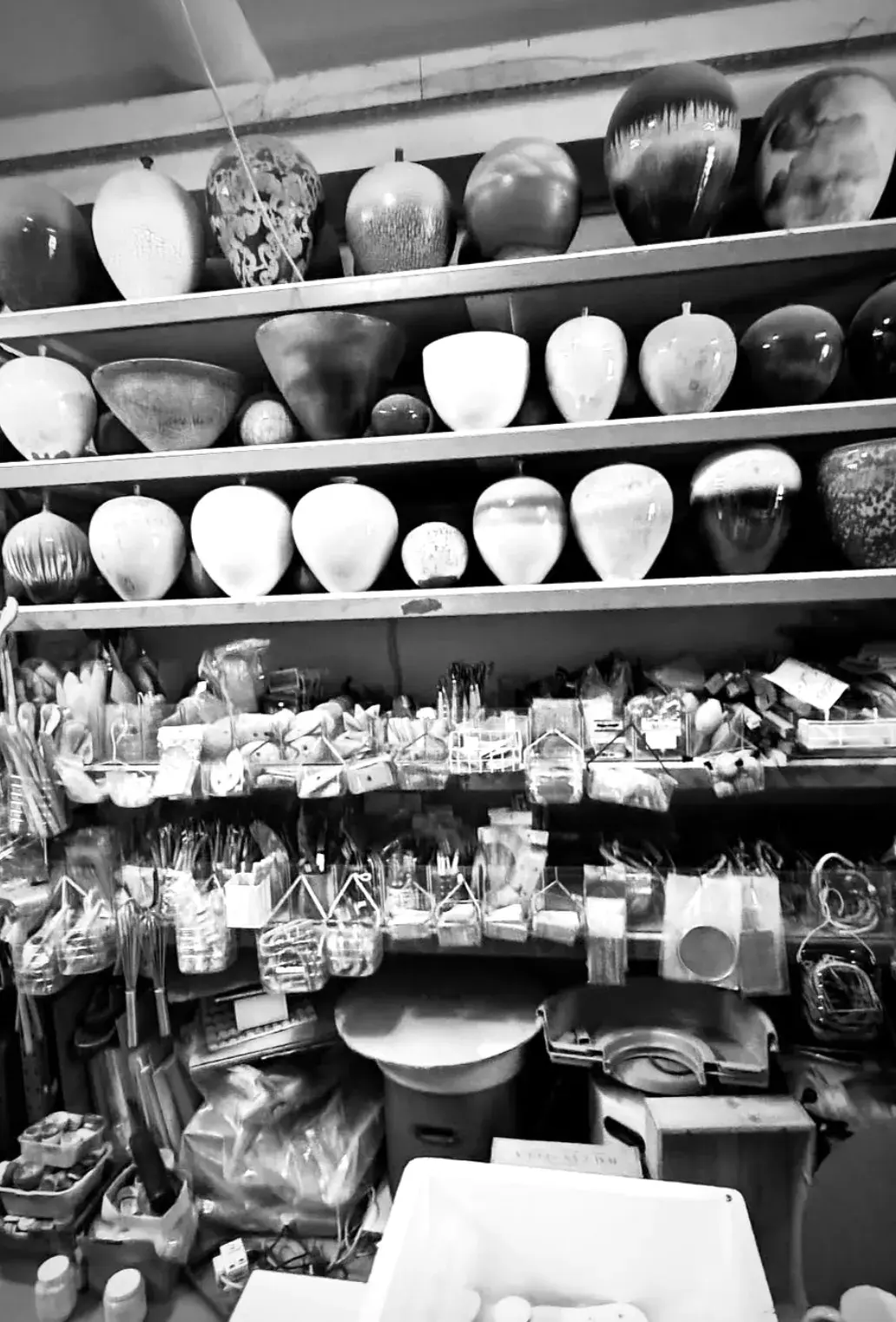
Crystalline-glazed vessels on the studio shelves
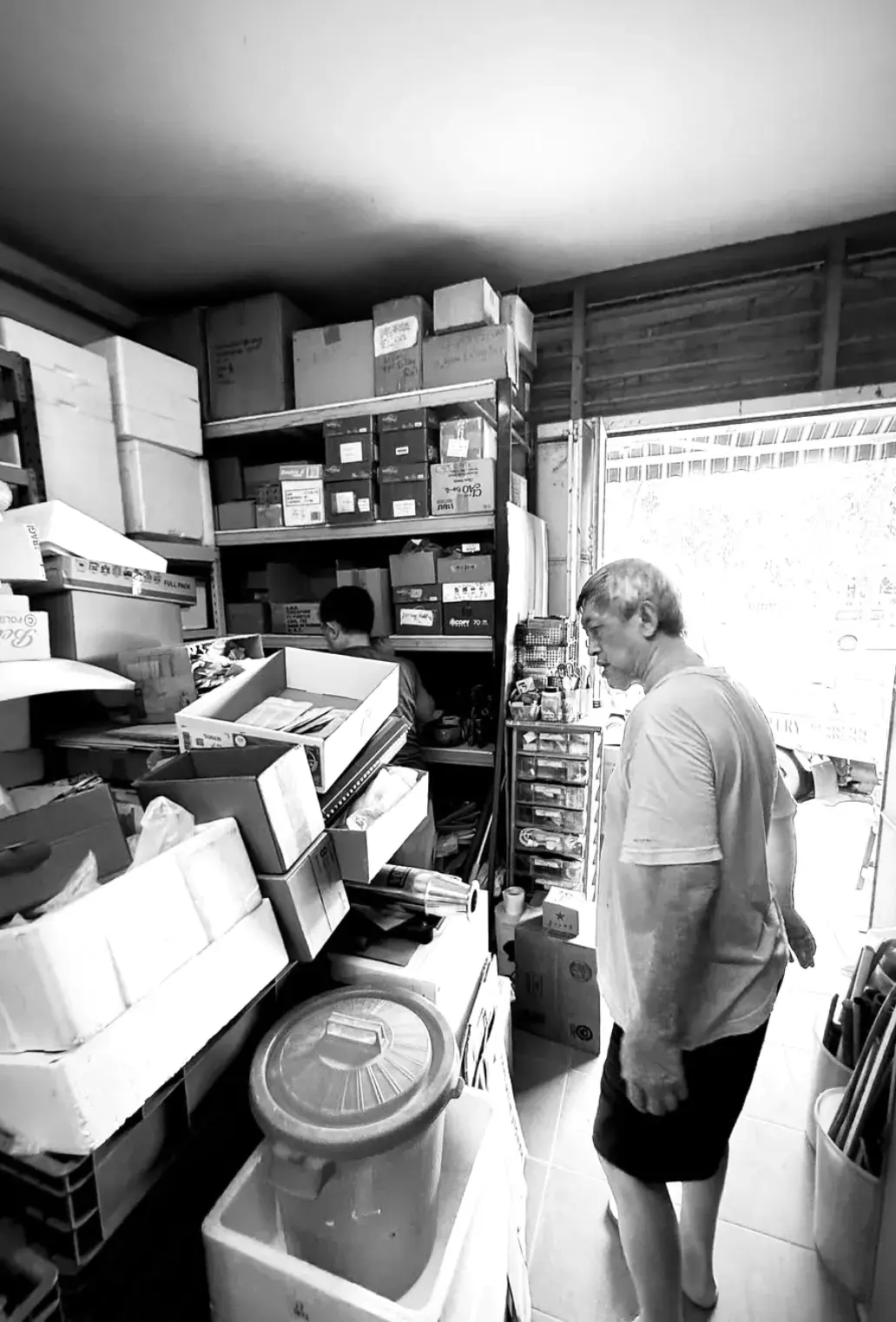
Mr. Chua inside the studio
Connect
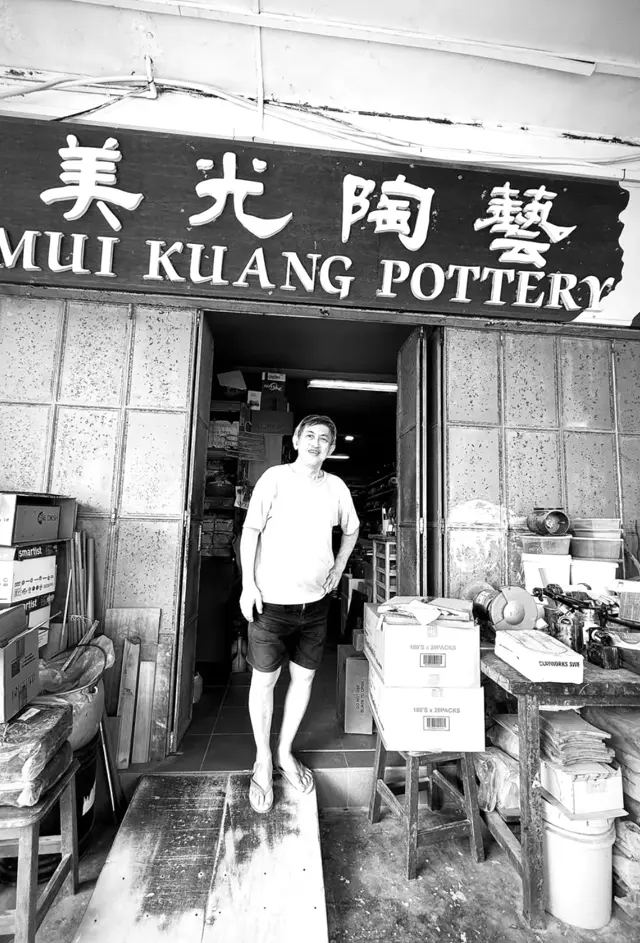
Mr. Chua Soo Kim
三妹光陶艺位于新加坡 Jalan Kelulut 22号(Singapore 809039),开设系统拉坯及釉药课程,并提供工坊会员计划。Mr. Chua Soo Kim runs Sam Mui Kuang Pottery with his siblings, focusing on pottery, kiln technology, glaze development and teaching. Sam Mui Kuang Pottery conducts structured wheel-throwing courses and glaze programmes, and offers studio membership at 22 Jalan Kelulut, Singapore 809039.

Ben Kee
Ben is the founder of KWHD Singapore, a creative and maker studio. He writes about makers, creative work and independent businesses for Scaffolds Stories.