Moving Through Seasons
An exploration of human emotion, the art of repair, and community co-creation.
By Sarah Ho — Founder of Nutshouse in Kyoto
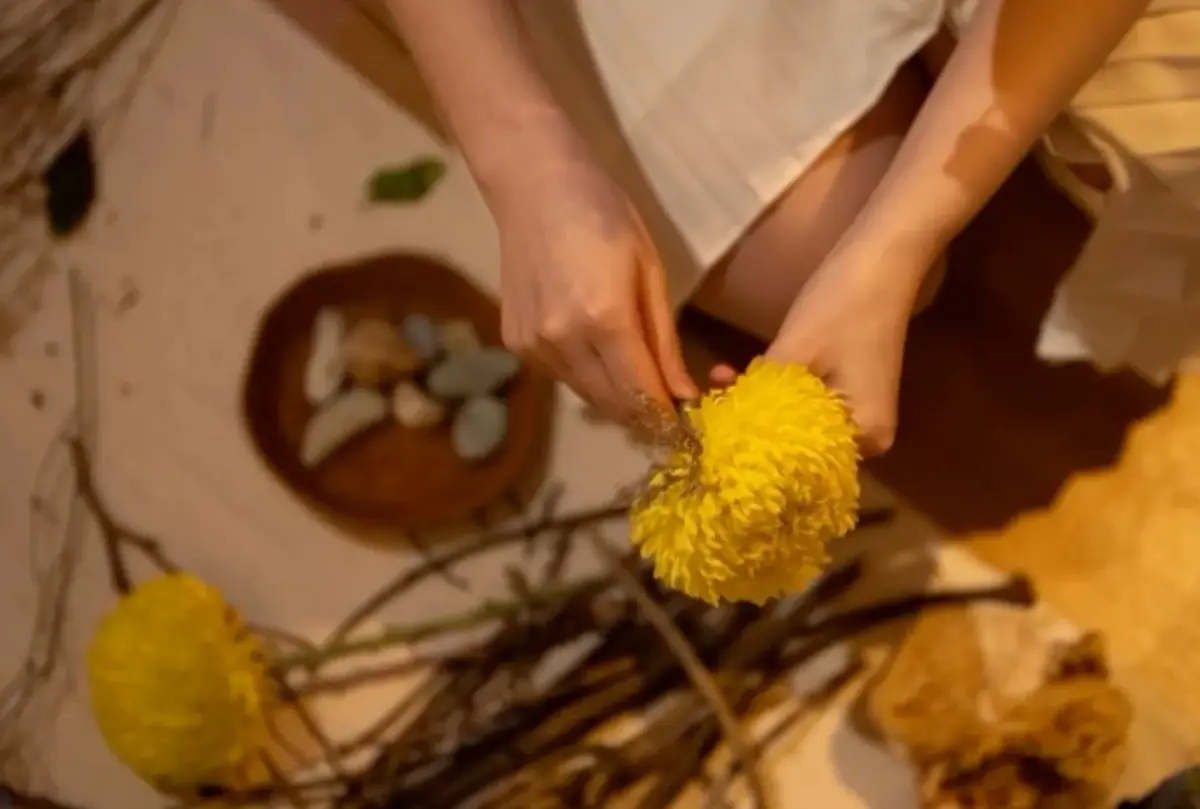
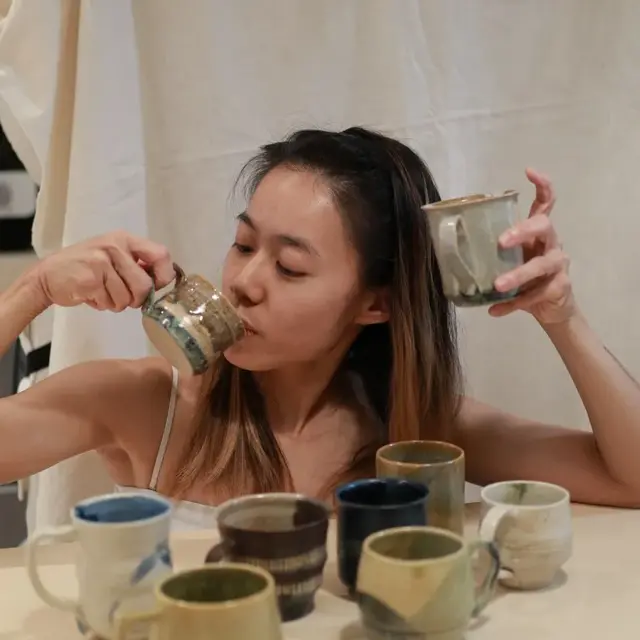
Moving Through Seasons is an interactive exhibition that serves as an experiment in blending expressive arts therapies, play therapy, and ceramics. Born from an intention to merge distinct practices, it has evolved into a movement—a free space where participants are invited to slow down, engage with materials without objectives, and connect with their surroundings. By providing a bounty of materials, such as cardboard and clay, the exhibition strips away societal pressures of being product-driven, encouraging a process of pure exploration and play.
1.Could you tell us a little bit about what the Moving Through Seasons exhibition is about and what you are trying to achieve with it?
I think it really started as an experiment for me personally to blend my two different practices together. That was the core intention and motivation. What it has become, however, is potentially a movement. It's a space where so many different people can just walk in, and even though they are all looking at the same materials, so many different things come out of it based on how they connect with the space, with each other, and with me. The whole concept of the show is really to slow down and allow yourself to just be and to notice. You might not even notice what's happening until you start talking to people, or perhaps you notice what you've made specifically because you don't talk to people. It’s about the little things that come up when you are given a unique kind of permission. In most spaces, you aren't handed a bunch of materials and told, "It's free, take it, do whatever you want." There are no instructions and no objectives unless you create one for yourself. For now, it is a space to be free. The more inward-looking part will come later.
2.So there are going to be more iterations of this?
I'm hoping to. I started with this inspiration of wanting to blend my practice in expressive arts therapies, play therapy, and ceramics. I've previously done this in a very structured setting driven by a therapeutic framework, working with people with disabilities. For example, at Art:Dis, I run a ceramics program. Even though I have a psychology degree rather than an arts degree, I've created a program that scaffolds the process of learning ceramics starting at a highly sensory level, using pre-clay textures. But Moving Through Seasons has no strict objective. My other programs have artistic, developmental, and relational KPIs because, as a social service agency, we answer to grant funders. Putting these two worlds together for this exhibition offers so many different combinations and formats. Venturing into this community arts concept means the outcome measures are different, and I will need to think about how to measure those while staying true to the project's original intention.
3.If you were to do different iterations, how would you approach them, and what would be the focus?
One iteration could solely be about letting go—making something, the art of detaching from it, and the process of grieving through that. Heavier elements exploring the emotional landscape of everyday life will likely come in much later iterations. For now, the easiest gateway for people was simply having a bountiful amount of materials and the freedom to explore without thinking about an outcome. Moving forward, the themes will depend on the data I collect from participants. Some themes that already resonated heavily were playfulness, being a child again, and the simple act of "being and breathing." Another major theme was process-driven versus product-driven functionality—exploring what "function" actually means to us and how society conditions us to view objects and our own self-worth.
4.Why is this theme of emotions so central to your work?
It is basically the essence of who I am and the core of my work. I describe counseling and therapy as being professional containers for human emotion. It involves how you nurture that capacity, how much you can hold, what happens when emotions spill over into your own feelings, and what you do to protect yourself so you can sustain the work. Emotions are what make us feeling beings.
5.When you talk about holding other people's emotions through all your years of work, what allows you to hold that space?
Knowing and learning the art of repair. All containers are breakable somehow, and sometimes your container will have a hole. The art of repair is deeply associated with a strong core value of care. If you care, you will repair when something is broken; you will notice. When you don't have the energy to care, you need to slow down and care for yourself first. Our capacity to care is deeply related to our capacity to hold on and let go. As you care for yourself and others, you learn to embrace the fact that people change. It becomes painful when expectations are violated, and it’s instinctual to become defensive or avoidant out of self-preservation. That’s why these themes surface so much in my work.
6.In this exhibition, you invited visitors to participate in your live sculpting. Why did you choose to do that?
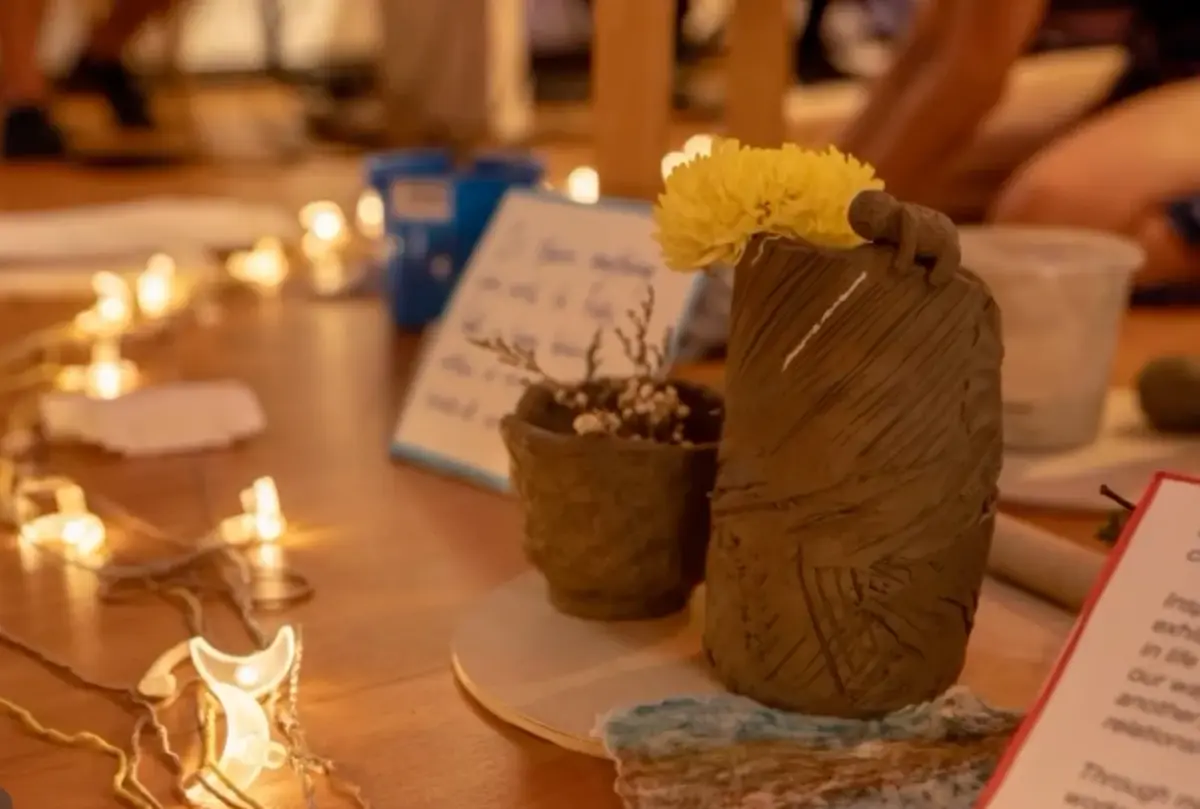
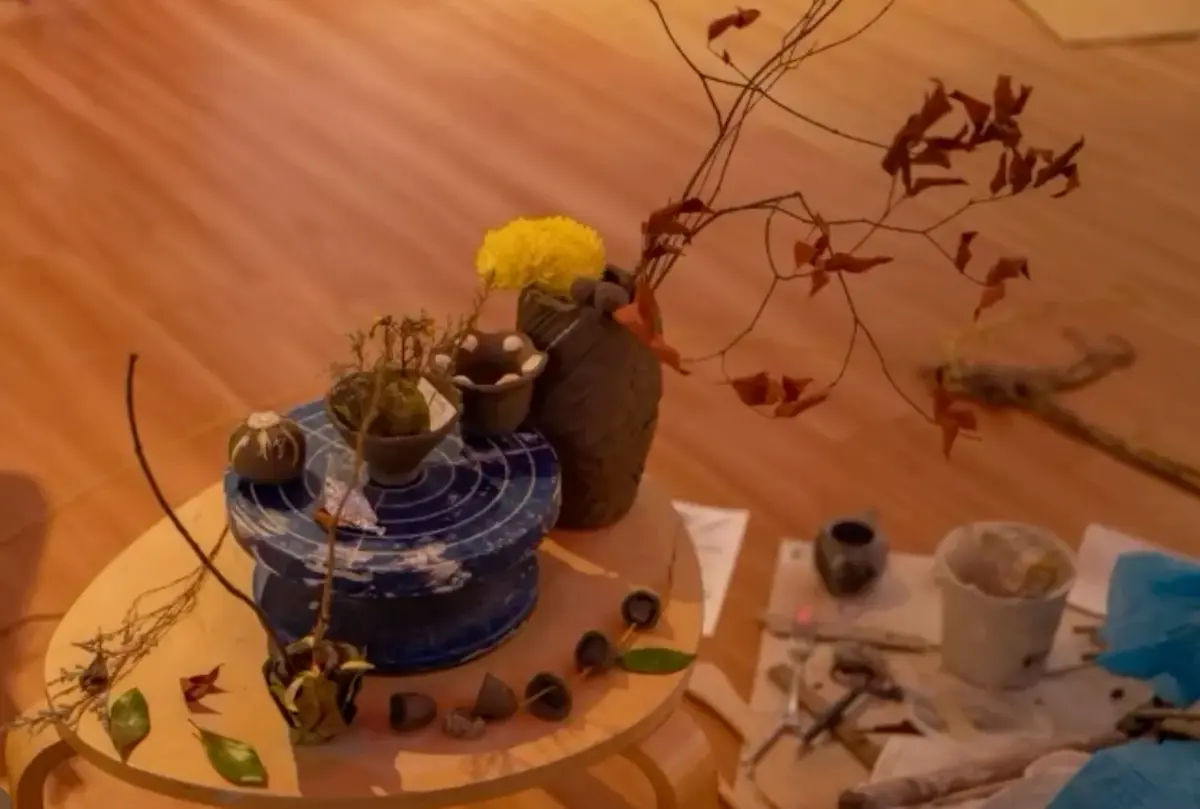
I wanted it to be a direct, concrete reflection of how things change and how our capacity to respond changes. For example, on the first day, someone created a treehouse on my sculpture. I thought the piece was just going to be a literal cylinder with tree bark texture, but through interaction, animals, windows, and stairs were imagined and co-created. That was incredibly healing and energizing. When you share art with somebody, it changes everything. I purposely steer clear of making purely functional work, which is why my pieces have strange punctures and folds. I want to challenge the pressure of being result-oriented and model what it's like to explore freely.
7.As an artist approaching this from two different angles, what do you want to explore with your work as a ceramicist?
I actually try to avoid calling myself a ceramicist because my knowledge of the medium comes from a "feeling mode" of operating rather than pure technicality. Ceramics can feel very heavy and technical, and I deeply respect those who pursue it that way. Artistically, I am more interested in thinking deeply about why I use what I use. A great example of this is my use of cardboard. Moving Through Seasons in Singapore was entirely self-funded, so I didn't have the budget for nice acrylic panels. Cardboard was my first choice because it’s cheap, accessible, and sturdy enough to stand on its own for signage. But it quickly became more than just a sign; it became part of the ambiance. It has a friendly, crafty nature. Cardboard is what children use to build playhouses, which inadvertently encourages adults to let their guard down and play, too.
8.Now that you've done this in both Singapore and Kyoto, what was different about the Kyoto experience for you?
Structurally, it was very different. In Singapore, the space was arranged in a square for a one-off, three-hour event. In Kyoto, the space was a narrow rectangle with a big circle in the middle, and it ran over three to four days. That changed the presentation and flow completely. The audience's response was also different. In Kyoto, there was much more curiosity and openness to try something, even if they didn't fully understand it. In Singapore, about 70% of the room was just spectating or on their phones. In Kyoto, participants were incredibly playful—some threw paper airplanes into the circle! Language was another beautiful barrier; even though I don't speak Japanese, the audience stepped in to translate for locals, acting as a bridge. Having live music improvisation also reduced our reliance on talking and encouraged people to simply watch, listen, and reflect.
9.The idea of someone's actions transforming things seems very important to you, both here and in your therapy work. Why?
Because hope is the biggest, most central medication. If you don't have hope that you can change anything, it's so hard to live. I do this work because I believe people can change. When people feel constrained by society, finding just one small thing they can change—whether it's watering a plant or making a mark on a piece of clay—makes us feel human again. In Japan, it's part of the psyche that when winter comes, spring is not far behind. One participant even made a piece attaching a green paperclip to a garden stone to represent winter melting into spring. I feel tired now that it has concluded, but my heart is exploding. I am so moved by how ready people were to just come in and be themselves. I'm looking forward to going home to rest, but I am incredibly thankful for this experience.
Connect
Sarah Ho
A project manager and events coordinator with experience in STEM education, Web3 and art management among other fields. Sarah currently runs Nutshouse in Kyoto, a space hosting exhibitions and experiential events co-created with diverse individuals.
Sarah Teh
An artist, instructor & production potter who loves working with children, youth and community